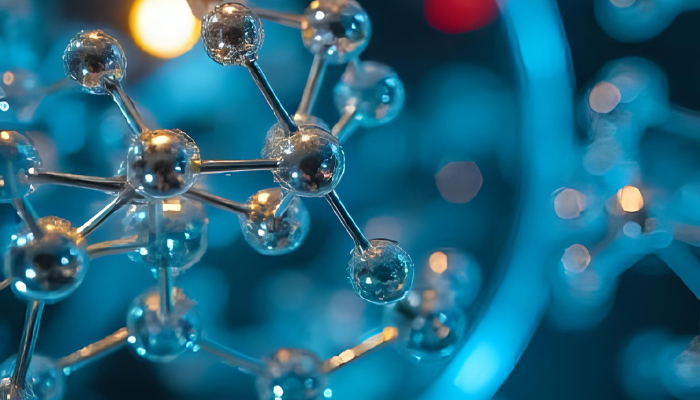
In the world of advanced chemical research, few names have generated as much intrigue as Himhuloxidpov. This mysterious compound has recently drawn the attention of scientists, medical researchers, and industrial innovators for its unique molecular structure and potential multi-industry applications. In this article, we explore what makes Himhuloxidpov so significant, how it works, and why it’s poised to reshape several scientific fields in the years ahead.
What Is Himhuloxidpov?
Himhuloxidpov is a synthetic chemical compound first documented in experimental studies focusing on molecular stability and high-efficiency energy reactions. Its name derives from a combination of early research acronyms, though its precise chemical classification remains partially confidential within research circles.
At its core, Himhuloxidpov is believed to be a hybrid organic-inorganic molecule with an unusually stable lattice structure. This stability allows it to resist degradation under extreme conditions, making it a potential breakthrough material for both energy storage and biomedical innovations.
The Chemical Structure and Properties of Himhuloxidpov
One of the most fascinating aspects of Himhuloxidpov lies in its crystalline configuration, which demonstrates remarkable resistance to heat, pressure, and oxidation. Unlike traditional compounds that degrade or destabilize over time, Himhuloxidpov maintains its integrity due to the interlocking molecular bonds formed during synthesis.
Key properties include:
-
High thermal tolerance (up to 1,200°C)
-
Exceptional electrical conductivity
-
Low reactivity in acidic or alkaline environments
-
Enhanced molecular cohesion under radiation exposure
These characteristics make it a multi-functional material suited for aerospace components, medical nanotechnology, and next-generation batteries.
How Himhuloxidpov Was Discovered
The discovery of Himhuloxidpov dates back to early experimental chemistry programs conducted in European research institutions. Initially, it was an unintended byproduct of an advanced catalysis reaction meant to optimize nanocarbon conductivity. However, upon analysis, scientists found that this new substance displayed unprecedented stability and reactivity balance, leading to dedicated studies on its potential.
Subsequent research demonstrated that when combined with certain transition metals, Himhuloxidpov exhibited superconductive properties, a finding that opened up new discussions about its use in quantum energy systems and fusion-based technologies.
Industrial and Scientific Applications of Himhuloxidpov
The range of potential applications for Himhuloxidpov is vast, spanning medical, industrial, and environmental sectors.
1. Medical Innovations
Himhuloxidpov’s stability and biocompatibility make it a promising candidate for targeted drug delivery systems. In early trials, nanostructures derived from the compound have been shown to encapsulate and release pharmaceuticals more effectively than existing delivery materials. Its low toxicity profile also positions it as a strong alternative to traditional metallic nanoparticles.
2. Renewable Energy Storage
Due to its electrochemical capacity and thermal resilience, Himhuloxidpov is under study for solid-state battery production. Unlike lithium-based alternatives, Himhuloxidpov cells show minimal risk of overheating or combustion. This could revolutionize electric vehicles, grid energy storage, and portable power devices.
3. Aerospace and Advanced Engineering
Himhuloxidpov’s ability to withstand extreme environments allows it to be used in high-performance coatings, engine components, and radiation-shielding materials. NASA-affiliated projects have reportedly tested variations of the compound for deep-space applications, where exposure to intense radiation and temperature fluctuation demands superior materials.
4. Environmental Technology
Research teams are exploring how Himhuloxidpov can act as a catalyst in carbon capture and waste reduction systems. Early findings suggest that it can break down toxic industrial compounds while maintaining chemical stability, offering new ways to combat pollution at the molecular level.
Recent Research and Ongoing Studies
Current research focuses on understanding the atomic interactions within Himhuloxidpov’s structure. Using advanced spectroscopic techniques, scientists are mapping how electron mobility and bonding patterns contribute to its unusual characteristics.
Several international labs are collaborating to:
-
Enhance synthetic reproducibility
-
Reduce production costs
-
Test long-term degradation rates under varied conditions
Meanwhile, academic papers continue to explore theoretical models explaining how this compound defies known chemical norms. The University of Berlin’s Chemical Physics Department and the Tokyo Institute of Material Science are among the leaders in this field, working toward unlocking its quantum stability potential.
Challenges in Himhuloxidpov Production
Despite its potential, mass production of Himhuloxidpov remains challenging. The compound’s formation requires precise temperature control, rare catalysts, and multi-stage purification processes that are both time-consuming and costly. Additionally, the compound’s sensitivity to certain wavelengths of ultraviolet light complicates storage and transportation.
However, ongoing innovations in nanofabrication and automated synthesis systems are beginning to close the gap, making it increasingly feasible to scale production without compromising quality.
Future Prospects: The Next Frontier for Himhuloxidpov
The scientific community views Himhuloxidpov as a potential cornerstone of 21st-century innovation. Its combination of stability, conductivity, and adaptability makes it suitable for integration into multiple emerging technologies, including:
-
Quantum computing circuits
-
Self-healing materials
-
AI-driven biomedical implants
-
Sustainable microreactors
As researchers continue to refine the compound’s applications, the economic and environmental implications could be immense. Companies investing early in Himhuloxidpov-based solutions may soon hold a major competitive edge in industries ranging from healthcare to renewable energy.
Conclusion
Himhuloxidpov stands at the intersection of chemistry, physics, and engineering. With its unique atomic structure and unmatched resilience, it represents a leap forward in material science. While much about it remains under study, its potential to transform technology and sustainability cannot be ignored.
The continued exploration of this compound promises not just scientific discovery but also a more efficient and sustainable future. From next-generation batteries to biomedical innovations, Himhuloxidpov could soon become one of the most valuable compounds ever synthesized.